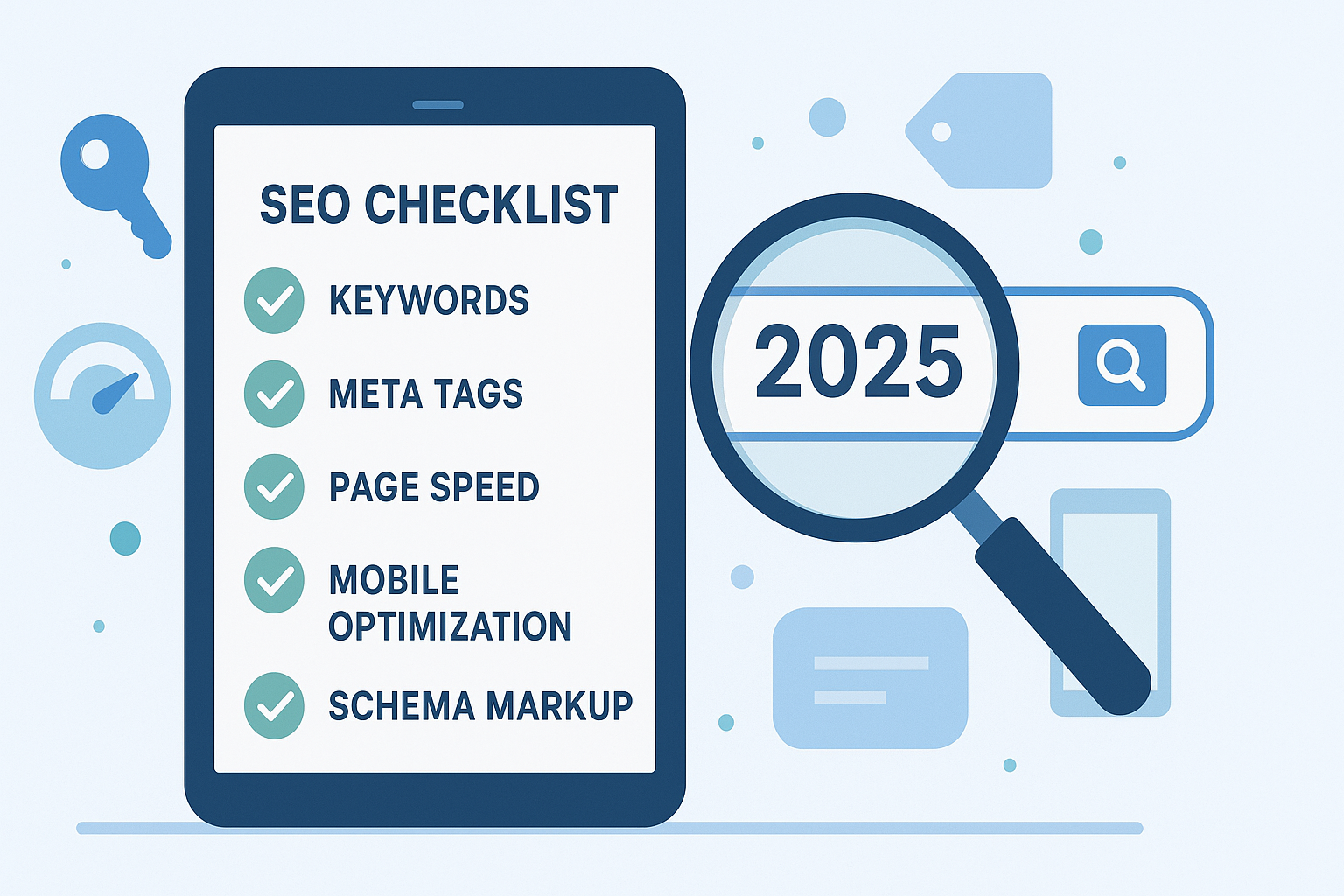
If you want your website to rank higher on Google in 2025, mastering on-page SEO is non-negotiable. With Google’s algorithm focusing more on user experience, content quality, and search intent, following a solid checklist can drastically improve your rankings.
This beginner-friendly guide gives you a complete on-page SEO checklist for 2025, packed with actionable steps you can apply today.
What Is On-Page SEO?
On-page SEO is the process of optimizing individual pages of your website to improve visibility on search engines. It includes content quality, keyword placement, meta tags, internal links, page speed, and overall user experience.
✅ On-Page SEO Checklist for 2025
1. Start With a Strong Keyword Strategy
Before writing content, identify your:
- Primary keyword (e.g., on-page SEO checklist 2025)
- Secondary keywords
- Long-tail keywords
- Related search queries (People Also Ask)
Tools to use: Google Keyword Planner, Ahrefs, SEMrush, Ubersuggest.
2. Create High-Quality, Search-Intent Focused Content
Google prioritizes useful and original content.
Ensure your content meets:
- E-E-A-T (Experience, Expertise, Authoritativeness, Trustworthiness)
- Search intent (informational, commercial, navigational)
- Accurate, updated information
- Easy-to-read format with headings, bullets, visuals
3. Optimize Your Title Tag for Maximum Clicks
Your title tag should:
- Include the primary keyword
- Be under 60 characters
- Promise value or a solution
Example:
On-Page SEO Checklist for 2025: A Complete Beginner Guide to Rank Faster
4. Write a Compelling Meta Description
A powerful description improves click-through rates.
- Keep under 155 characters
- Use the primary keyword naturally
- Add a call-to-action or benefit
5. Use Proper Heading Structure (H1 to H6)
Your H1 must include the primary keyword.
Break content into clean sections using H2, H3, H4.
Example structure:
- H1: On-Page SEO Checklist for 2025
- H2: What Is On-Page SEO?
- H2: Checklist
- H3: Keyword Strategy
- H3: Meta Tags
…and so on.
6. Optimize URL Structure
SEO-friendly URLs should be:
- Short and clean
- Keyword-rich
- Avoid unnecessary parameters
Example:
yourdomain.com/on-page-seo-checklist-2025
7. Use Keywords Naturally Throughout Content
Google no longer rewards keyword stuffing.
Maintain:
- 0.5%–2% keyword density
- Natural placement in the first 150 words
- Keyword in headings and conclusion where possible
8. Add Internal Links (Very Important for SEO 2025)
Internal links help:
- Google understand your content better
- Increase user engagement
- Boost ranking power across pages
Link to:
- Relevant blogs
- Service pages
- Pillar pages
9. Add External Links to Authority Sources
Outbound links increase credibility.
Link to trusted sites like:
- Google Search Central
- HubSpot
- Search Engine Journal
10. Optimize Images for SEO
- Use compressed images (WebP preferred)
- Add descriptive alt text
- Add keywords where relevant
Example alt text:
“on-page SEO checklist 2025 guide for beginners”
11. Improve Page Speed & Core Web Vitals
Google ranking factor for 2025 includes:
- Faster loading pages
- Visual stability
- Mobile responsiveness
Check speed using:
- PageSpeed Insights
- GTmetrix
- Lighthouse
12. Use Schema Markup (Structured Data)
Helps Google understand your content and show rich snippets.
Recommended schema types:
- Article
- FAQ
- How-To
- Breadcrumb
13. Make Your Website Mobile-Friendly
More than 60% users search on mobile.
Check mobile usability issues in Google Search Console.
14. Create an Engaging User Experience
Google rewards websites that keep users engaged.
Tips:
- Short paragraphs
- Bullet points
- High-quality graphics
- Clear fonts
- Easy navigation
15. Add FAQs (Boosts Zero-Click Visibility)
Adding FAQ schema increases your chances of ranking in PAA (People Also Ask).
16. Optimize for Featured Snippets
To capture the #0 position:
- Add definitions
- Use lists and tables
- Answer queries clearly in 40–60 words
17. Keep Your Content Updated
Google ranks fresh content higher.
Update your blog:
- Every 3–6 months
- Add new stats, images, keywords
🎯 Final Thoughts
Following this on-page SEO checklist for 2025 will help your content rank higher, attract more traffic, and provide a better user experience. Whether you’re a beginner or a business owner, applying these steps consistently can drastically improve your organic results.
FAQ
On-page SEO refers to optimizing individual web pages using keywords, meta tags, headings, images, internal links, and user experience to improve Google ranking.
Google now prioritizes user experience, content depth, and search intent—making on-page optimization essential for ranking higher.
You should review and update your content every 3 to 6 months to keep it fresh and relevant.
Popular tools: Google Search Console, Ahrefs, SEMrush, Ubersuggest, Surfer SEO, and Yoast SEO.
A natural keyword density of 0.5% to 2% is ideal. Avoid stuffing keywords unnaturally.
Yes. Schema markup helps search engines understand your content and improves chances of enhanced search results like rich snippets.
Absolutely. Internal links improve navigation, pass authority, and help Google crawl your website better.
Yes. Adding keyword-rich alt text improves accessibility and enhances image SEO.
Ensure your title stays below 60 characters to avoid truncation on Google.
SEO experts recommend 1,500–2,500 words of high-quality, user-focused content.

Expert contributor at Digital Knowledge Hub, sharing actionable insights on digital marketing and SEO.
Leave a Reply